Sports Injury Treatment and Rehab in Chicago
Injuries are an unfortunate reality of being an athlete, whether you are training for the Chicago Marathon, playing in a weekend league, lifting, or competing at a high level. Effective sports injury rehabilitation goes beyond treating the injured area. It means understanding the demands of your sport and addressing the strength, mobility, and movement patterns that contributed to your injury, so you not only return to your sport but are better prepared to stay there.
At our River North sports physical therapy clinic, every plan is built around you, your sport, and your goals, with care delivered one on one by your physical therapist for the entire visit. We treat everything from acute sprains and overuse injuries to complex post surgical rehab, using hands on treatment, progressive strengthening, sport specific training, and objective return to sport testing.
We also offer blood flow restriction (BFR) training, which uses a specialized cuff to partially limit blood flow to a working limb. This allows you to build muscle strength using much lighter weights than traditional training, making it especially helpful after surgery or injury when heavy lifting is not yet safe. BFR can help limit muscle loss early in recovery and speed up your return to full strength.
You do not need a physician referral to start. Illinois direct access allows you to begin physical therapy without seeing your doctor first, although some insurance plans may still require a referral for coverage.

ACL Injury and Reconstruction
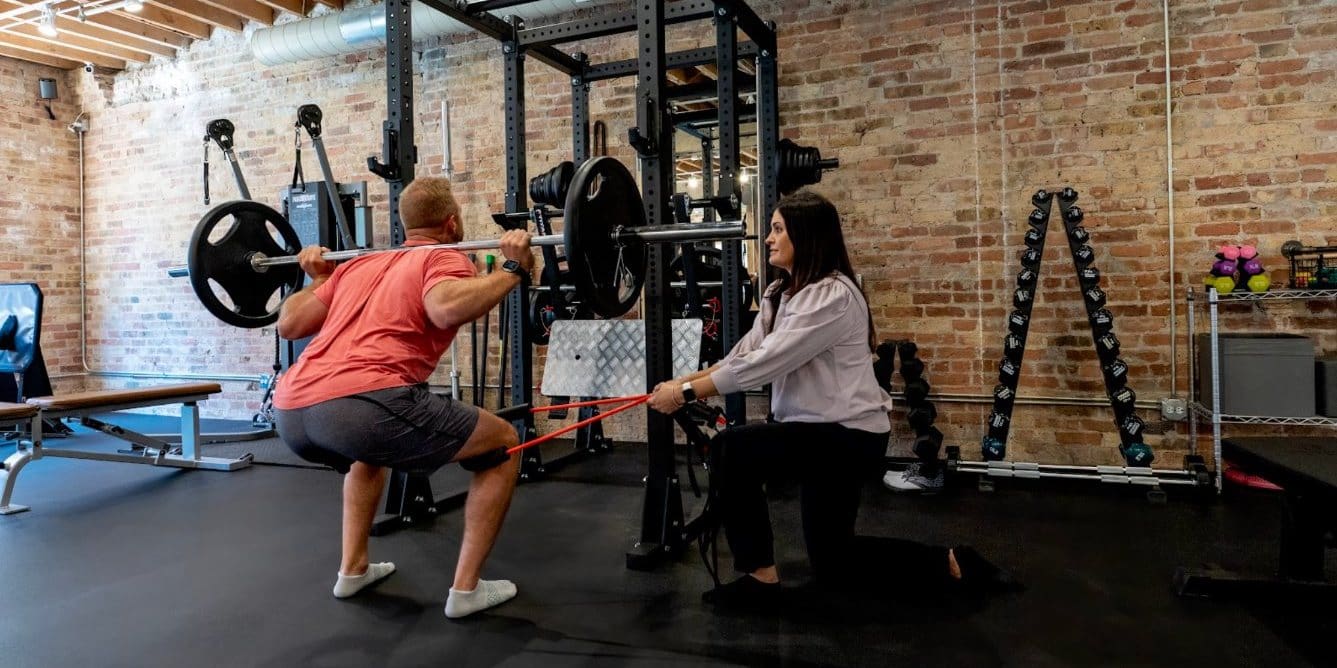
The anterior cruciate ligament (ACL) is one of the main stabilizing ligaments of the knee, and it is commonly injured during sports that involve cutting, pivoting, jumping, or sudden stops, such as soccer, basketball, football, skiing, and volleyball. Whether you are preparing for surgery, recovering from reconstruction, or managing your injury without surgery, ACL rehab is a long process that requires careful progression. Our physical therapists guide you through each phase with one goal in mind: getting you back to your sport with a strong, stable, and confident knee.
We commonly help with:
- Complete and partial ACL tears
- Rehab before surgery (prehab) to reduce swelling and restore motion and strength
- Recovery after ACL reconstruction with any graft type, including patellar tendon, hamstring, and quadriceps tendon
- ACL injuries combined with meniscus tears or other ligament injuries
- Non surgical management of ACL injuries
- Regaining full knee extension and quadriceps strength
- Knee pain, swelling, or instability during or after recovery
- Return to running, cutting, and jumping
- ACL revision surgery rehab
- Injury prevention for athletes returning to high risk sports
When to come in: As soon as possible after your injury. Starting physical therapy before surgery to calm swelling, restore range of motion, and build strength leads to a smoother recovery afterward. After surgery, most people begin physical therapy within the first few days. If you finished rehab elsewhere but still do not feel ready for your sport, we can help with that too.
What to expect: Your first visit includes a detailed conversation about your injury, surgery if you had one, and the sport or activities you want to return to, along with an assessment of your knee motion, swelling, strength, and movement. Early rehab focuses on restoring full knee motion, controlling swelling, and reactivating the quadriceps. Your plan may also include blood flow restriction (BFR) training, which allows you to build quadriceps and leg strength with light weights while your graft heals and heavy loading is not yet safe. This can help limit the muscle loss that often follows ACL surgery. From there, we progress through strengthening, balance, and running, and then into jumping, cutting, and sport specific training. We follow your surgeon's protocol while progressing you based on how your knee is actually responding, and we communicate with your surgeon throughout your care.
Return to sport testing: Returning to sport too early is one of the biggest risk factors for reinjury. Most athletes return around nine months or later after reconstruction, but time alone is not enough. Before you are cleared to return, we use objective strength, hop, and movement testing to compare your surgical and non surgical legs, so you and your surgeon can make the decision with confidence.
Had ACL reconstruction or planning surgery? Learn about our one-on-one ACL rehab program.
Achilles Tendinopathy and Rupture
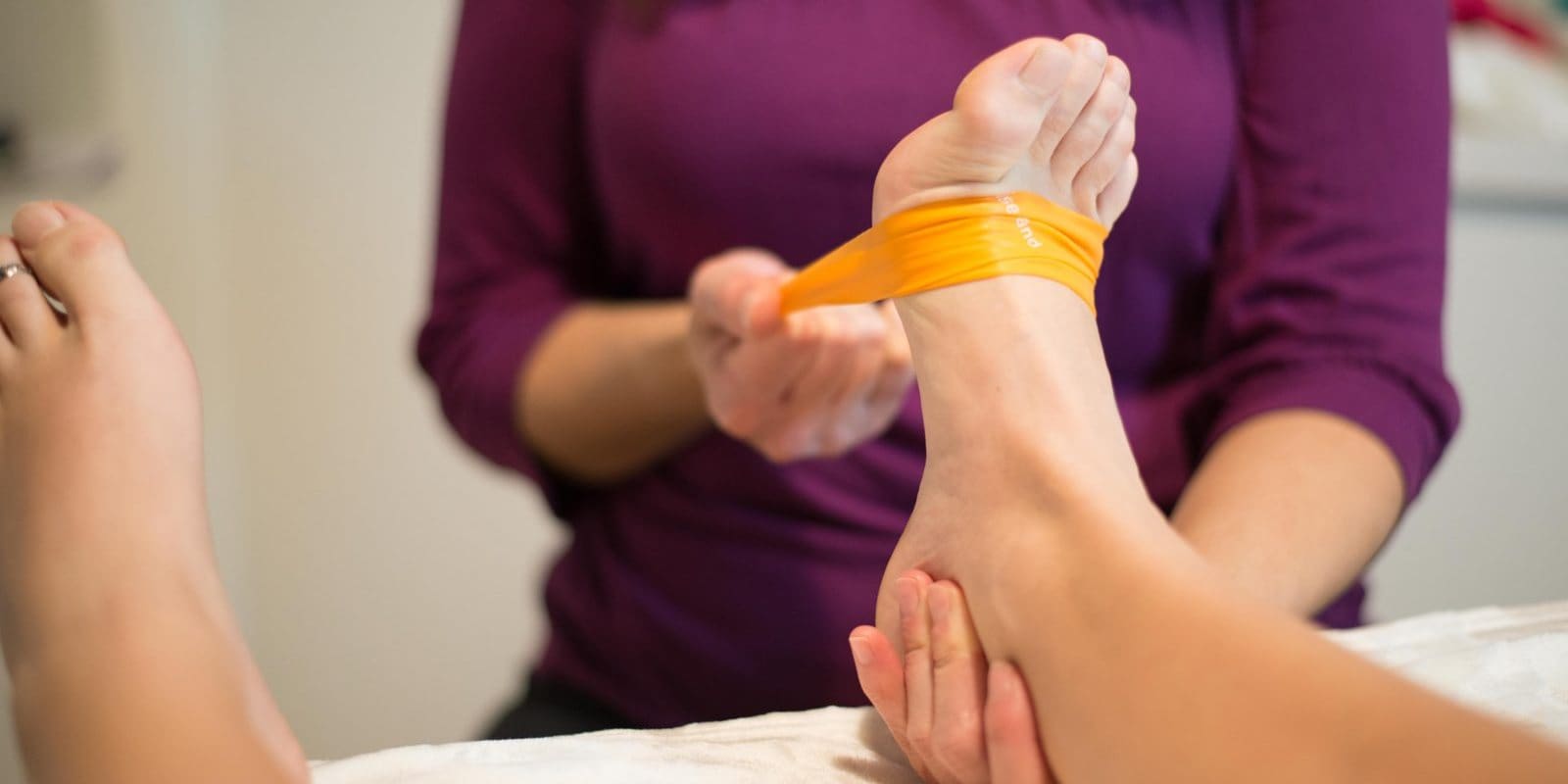
The Achilles tendon connects your calf muscles to your heel and absorbs a tremendous amount of force with every step, jump, and stride. Overuse can lead to pain and irritation in the tendon, known as Achilles tendinopathy, while sudden explosive movements can cause the tendon to rupture. Both are common in runners and in sports like basketball, tennis, and pickleball. Whether your pain has been building gradually or you are recovering from a rupture, our physical therapists build a plan that restores the strength and capacity your tendon needs to handle your sport.
We commonly help with:
- Pain and stiffness in the Achilles, especially in the morning or at the start of a run
- Midportion and insertional Achilles tendinopathy
- Pain at the back of the heel
- Partial tears of the Achilles
- Complete Achilles ruptures managed with or without surgery
- Recovery after Achilles repair surgery
- Calf strains and calf weakness
- Return to running, jumping, and sport after Achilles injury
When to come in: If Achilles pain has lasted more than a couple of weeks, is getting worse, or is changing how you run or walk, it is worth getting evaluated. Tendon pain often improves temporarily with rest and then returns once training resumes, so a structured loading program is key. If you suspect a rupture, see a physician right away, and then start physical therapy as soon as you are cleared.
What to expect: Your first visit includes a detailed conversation about your symptoms, training, and goals, along with an assessment of your calf strength, ankle mobility, and movement. Tendons respond best to progressive loading, so your plan will focus on gradually building calf and tendon strength while managing your training so pain settles rather than flares. After a rupture, we guide you through each phase of healing, from protected movement to strengthening, running, and sport specific training, and we communicate with your surgeon or physician throughout your care. Before returning to full activity, we test your calf strength and hopping ability to make sure your tendon is ready.
Recovering from Achilles surgery? Learn about our one-on-one Achilles tendon repair rehab.
Shoulder Injuries
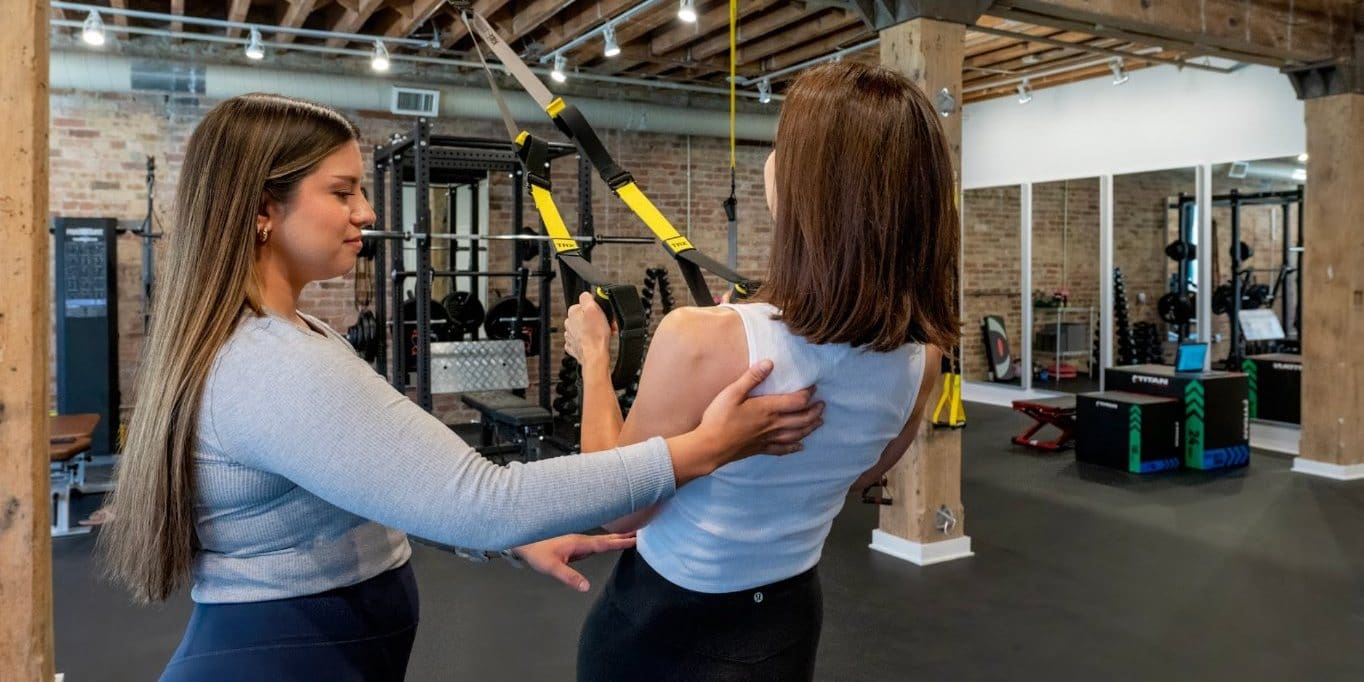
The shoulder is the most mobile joint in the body, which makes it essential for overhead sports, lifting, and everyday activity, but also vulnerable to injury. Shoulder problems in athletes often come from repetitive overhead motion, a fall or collision, or gradual changes in strength and control. Our physical therapists look at the shoulder as part of a larger chain, including your shoulder blade, upper back, and core, to restore pain free motion and strength for your sport.
We commonly help with:
- Rotator cuff strains, tendinopathy, and tears
- Recovery after rotator cuff repair surgery
- Shoulder impingement and bursitis
- Labral tears, including SLAP tears
- Shoulder dislocations and instability
- Recovery after shoulder stabilization surgery
- Biceps tendinopathy
- Frozen shoulder (adhesive capsulitis)
- Shoulder pain in swimmers, throwers, climbers, and volleyball, tennis, and pickleball players
- Shoulder pain with weightlifting, CrossFit, and overhead pressing
When to come in: If shoulder pain is limiting your training, waking you up at night, or making it hard to reach overhead or behind your back, it is worth getting evaluated. After a dislocation or surgery, physical therapy is an essential part of recovery and helps lower your risk of future injury.
What to expect: Your first visit includes a detailed conversation about your symptoms, sport, and goals, along with an assessment of your shoulder motion, strength, shoulder blade control, posture, and movement. Your plan may include manual therapy, mobility work, rotator cuff and shoulder blade strengthening, and sport specific training such as throwing, swimming, or lifting progressions. After surgery, we follow your surgeon's protocol while progressing you based on how your shoulder is responding, and we communicate with your surgeon throughout your care.
Recovering from shoulder surgery? Learn about our one-on-one rotator cuff repair rehab and shoulder labral repair rehab.
Hip Pain and Hip Injuries
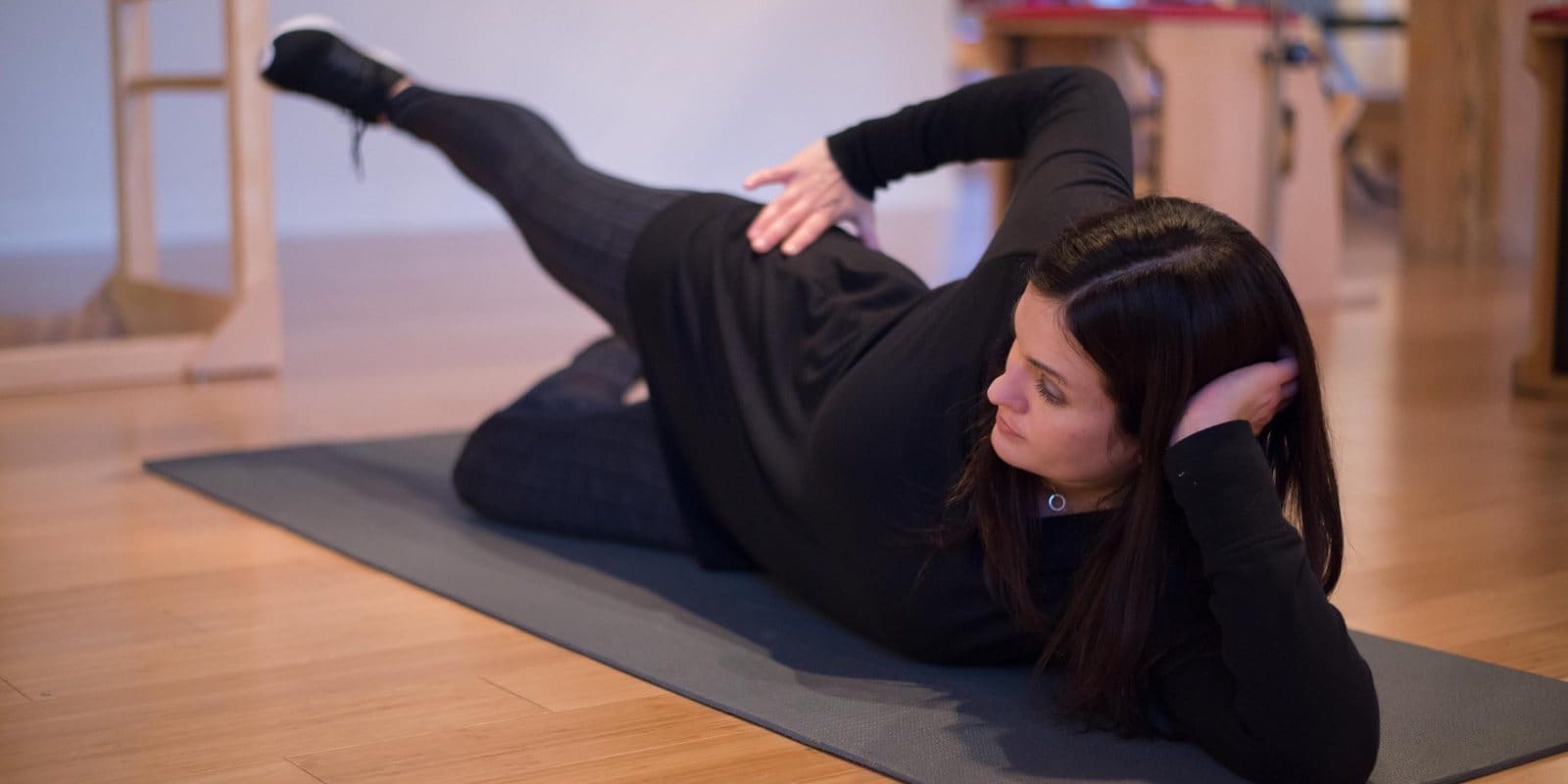
The hip plays a central role in nearly every sport, transferring force between your legs and trunk as you run, cut, jump, kick, and lift. Hip injuries in athletes can range from muscle strains to structural problems within the joint itself, and pain can show up in the front of the hip, the groin, the side of the hip, or the buttock. Our physical therapists identify what is driving your symptoms and build a plan to restore strength, mobility, and control so you can return to your sport.
We commonly help with:
- Femoroacetabular impingement (FAI)
- Hip labral tears
- Recovery after hip arthroscopy
- Hip flexor strains and tendinopathy
- Groin and adductor strains
- Gluteal tendinopathy and lateral hip pain
- Hamstring strains and high hamstring tendinopathy
- Snapping hip
- Hip and pelvic stress injuries in runners
- Hip pain related to the pelvic floor or low back
When to come in: If hip or groin pain is limiting your training, keeps returning, or comes with clicking, catching, or a feeling of instability, it is worth getting evaluated. Hip pain that has not improved with general strengthening may also benefit from a closer look at your pelvis, low back, and pelvic floor.
What to expect: Your first visit includes a detailed conversation about your symptoms, training, and goals, along with an assessment of your hip motion, strength, and movement patterns, as well as your low back and pelvis. Your plan may include manual therapy, mobility work, hip and core strengthening, and progressive return to running, cutting, and sport specific activity. After hip arthroscopy, we follow your surgeon's protocol, progress you based on how your hip is responding, and communicate with your surgeon throughout your care.
Had hip arthroscopy or a labral repair? Learn about our one-on-one hip labral repair rehab.
Running Injuries
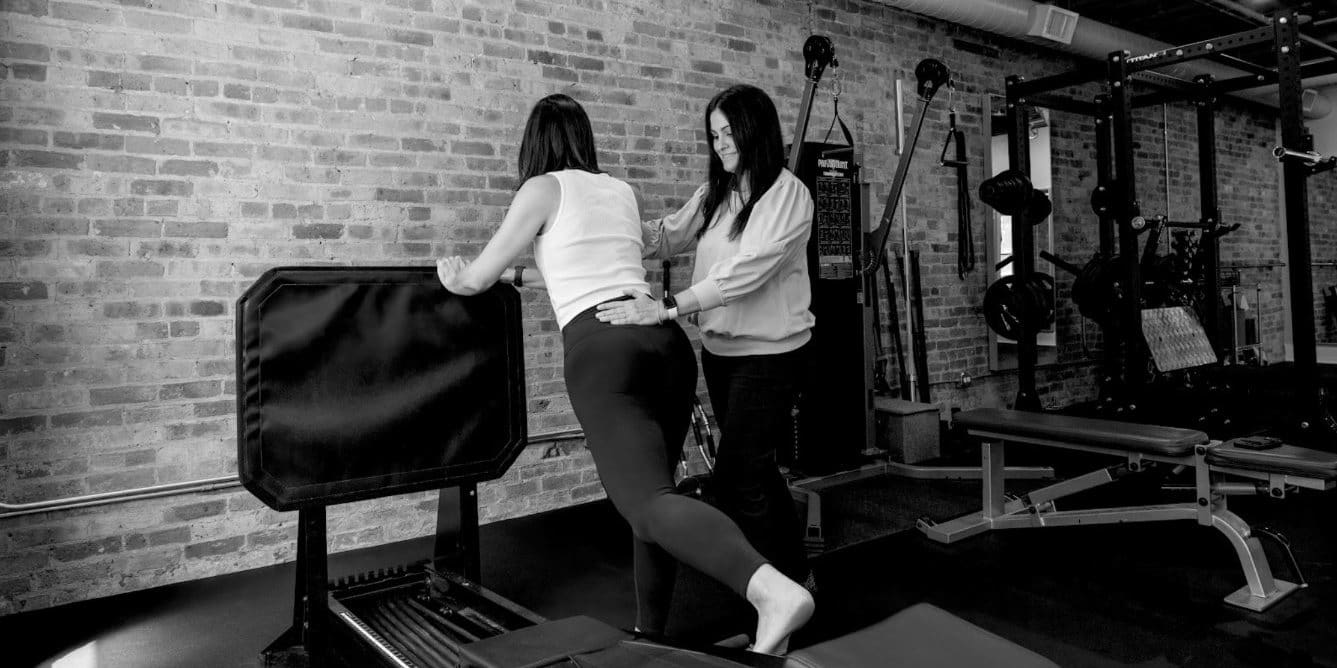
Running is one of the most accessible ways to stay active, and Chicago has one of the strongest running communities in the country. But most running injuries come from doing a little too much, a little too soon, or from strength and mobility limitations that catch up with you as mileage builds. Our physical therapists understand runners and the demands of training, and we focus on getting you back on the road or trail while addressing what led to the injury in the first place, so you can keep running for years to come.
We commonly help with:
- Runner's knee (patellofemoral pain)
- IT band syndrome
- Achilles tendinopathy
- Plantar fasciitis and heel pain
- Shin splints (medial tibial stress syndrome)
- Stress fractures and bone stress injuries
- Hamstring strains and high hamstring tendinopathy
- Hip and gluteal pain
- Low back pain with running
- Bladder leakage or pelvic floor symptoms with running
- Returning to running after pregnancy, injury, or surgery
- Recurring injuries during marathon and half marathon training
When to come in: If pain is changing how you run, lasting beyond a few days, getting worse as mileage increases, or keeps coming back each training cycle, it is worth getting evaluated. Getting help early often means you can keep training in some form rather than stopping completely.
What to expect: Your first visit includes a detailed conversation about your symptoms, training history, mileage, and race goals, along with an assessment of your strength, mobility, and movement, which may include a look at your running form or a full gait and running analysis. Your plan may include manual therapy, targeted strengthening, mobility work, and guidance on adjusting your training so you can stay active while you heal. As you improve, we build a gradual return to running plan that gets you back to your full mileage and race goals with confidence.
Ankle Sprains and Ankle Instability
Ankle sprains are among the most common sports injuries, especially in sports that involve jumping, cutting, or uneven surfaces, such as basketball, soccer, volleyball, and trail running. Many people treat a sprain with rest alone, but without proper rehab, the ankle can be left weaker and less stable, which raises the risk of spraining it again. Our physical therapists help restore strength, balance, and confidence in your ankle so you can return to your sport and reduce your risk of reinjury.
We commonly help with:
- Acute ankle sprains
- High ankle sprains
- Recurring ankle sprains and chronic ankle instability
- Ankle stiffness, swelling, or pain that lingers after a sprain
- Peroneal tendon injuries
- Recovery after ankle ligament repair surgery
- Balance and stability deficits after injury
- Return to cutting, jumping, and trail running
When to come in: Starting physical therapy within the first few days to weeks after a sprain helps you recover faster and lowers the risk of future sprains. If your ankle still feels weak, unstable, or swollen weeks or months after an injury, or if you keep rolling it, it is worth getting evaluated.
What to expect: Your first visit includes a detailed conversation about your injury, sport, and goals, along with an assessment of your ankle motion, swelling, strength, and balance. Your plan may include manual therapy, mobility work, strengthening, and balance and agility training that progresses toward the specific demands of your sport. Before you return to full activity, we test your strength, balance, and hopping ability to make sure your ankle is ready.
Meniscus Tears
The meniscus is a C shaped piece of cartilage in the knee that acts as a shock absorber and helps keep the joint stable. Meniscus tears can happen suddenly with twisting or pivoting, or develop gradually over time. Many meniscus tears can be managed successfully with physical therapy alone, and when surgery is needed, rehab plays a key role in getting you back to full activity. Our physical therapists build a plan based on your type of tear, your treatment, and the sport you want to return to.
We commonly help with:
- Acute and degenerative meniscus tears
- Non surgical management of meniscus tears
- Recovery after meniscus repair
- Recovery after partial meniscectomy (meniscus trimming)
- Meniscus tears combined with ACL or other ligament injuries
- Knee pain, swelling, locking, or catching
- Loss of knee motion or strength after injury
- Return to running, squatting, jumping, and cutting
When to come in: If you have knee pain, swelling, or a catching or locking feeling after a twist or pivot, or knee pain that has built up gradually, it is worth getting evaluated. Starting physical therapy early can often help you avoid surgery, and if surgery is needed, starting soon afterward helps you recover more smoothly.
What to expect: Your first visit includes a detailed conversation about your injury, any surgery, and your goals, along with an assessment of your knee motion, swelling, strength, and movement. Recovery after a meniscus repair is typically slower and more protected than after a meniscectomy, so your plan will be tailored to the procedure you had and your surgeon's protocol. From there, we progress through strengthening, balance, and running, and into sport specific training, and we communicate with your surgeon throughout your care.
Other Sports Injuries We Treat
- Patellar tendinopathy (jumper's knee)
- MCL and other knee ligament sprains
- Tennis and golfer's elbow
- Wrist and hand sprains
- Low back pain related to training or lifting
- Neck and upper back pain from cycling or lifting
- Muscle strains and overuse injuries
- Post surgical rehab after other orthopedic procedures
Sports Performance and Injury Prevention
You do not have to be injured to benefit from physical therapy. Our sports performance programs help athletes move better, build strength and power, and lower their risk of injury so they can train consistently and perform at their best, whether you are training for the Chicago Marathon, working on your golf swing, or getting ready for a new season.
Movement assessment. Every program starts with a detailed look at how you move. We assess your strength, mobility, balance, and the movement patterns your sport demands to find weak links, imbalances, and old injuries that may be limiting your performance or setting you up for your next injury.
Strength and power training. We build a progressive program around the muscles and movements that matter most for your sport. Our training space includes squat racks, free weights, TRX, and plyometric equipment, so your program can progress from foundational strength to sport specific power and speed.
Return to sport testing. If you are coming back from an injury, we use objective strength, hop, and movement testing to show when you are truly ready to return, rather than relying on time alone. This gives you, your coach, and your surgeon clear information to guide the decision.
Blood flow restriction (BFR) training. BFR lets you build strength with much lighter weights, which makes it a useful tool for athletes who need to keep building muscle while protecting a healing injury.
Running analysis. For runners, a gait and running analysis looks at your form on video to find the mechanics that may be contributing to pain or slowing you down, along with strategies to correct them.
Athletes we work with include runners and triathletes, golfers, soccer, basketball, and volleyball players, overhead and throwing athletes, lifters, and dancers.
Get Back to Your Sport
Whether you are a weekend warrior, a dedicated runner, or a competitive athlete, an injury does not have to mean the end of your season. Our physical therapists have worked with college and professional athletes, and we bring that same level of expertise and attention to every patient who walks through our door. We take the time to understand your sport, your goals, and what your body needs to perform, then build a plan that gets you back to the activities you love stronger and more confident than before.
Book your sports injury evaluation at our River North clinic today.